How Firearms Work
Modern firearms are the product of centuries of trial-and-error development
Peter Suciu
• 9 min read
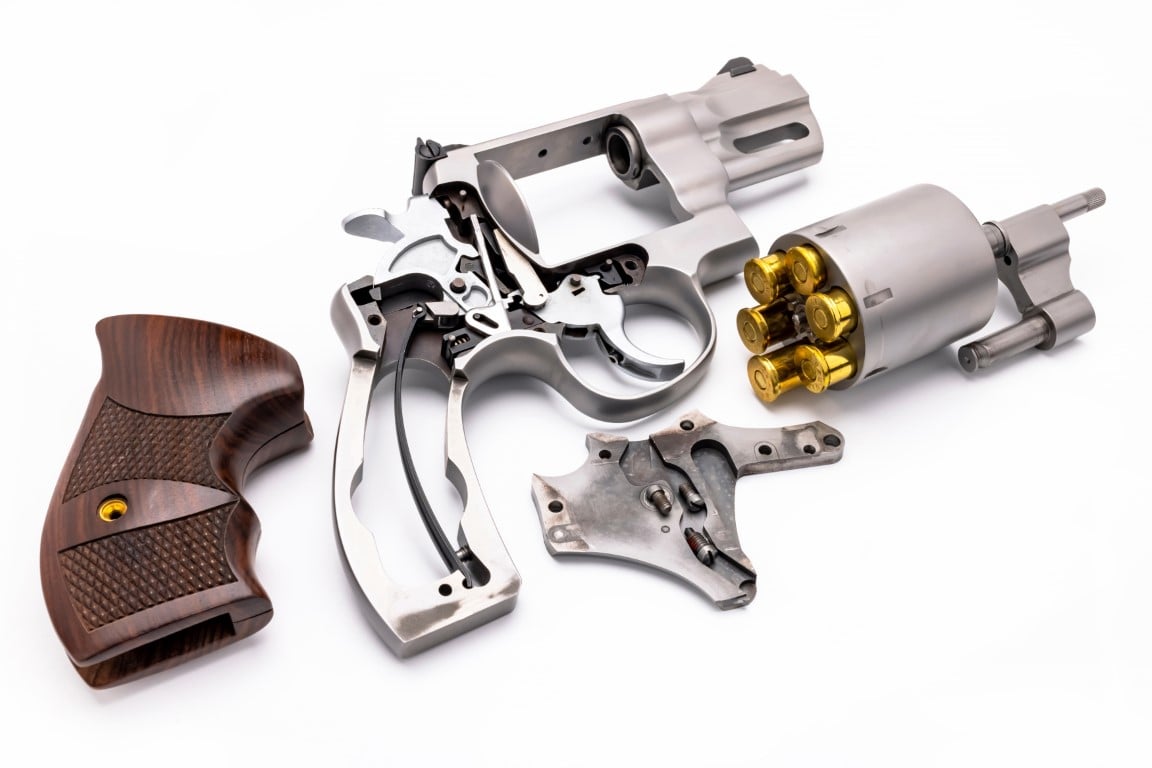
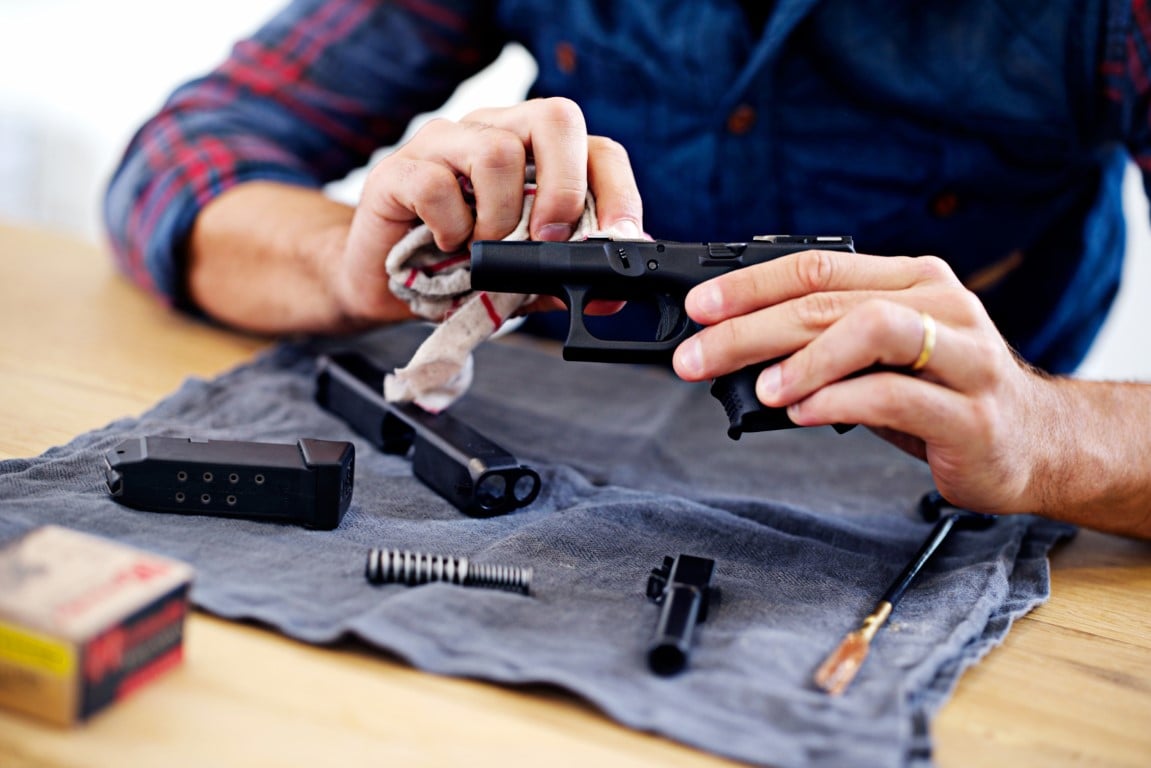
The principle is really quite simple. You point the gun, pull the trigger, and a bullet is fired. The operation is a bit more complicated than that, as it requires a variety of components to work properly. Firearms are fairly simplistic in design, yet also complex in that each is built around the right mix of the chemical and mechanical–that is, the materials used to make the ammunition (the cartridge and bullet), as well as the actual tool that fires it. Moreover, today's firearms are also the product of centuries of innovation, refinement, and improvement.
The Beginning
Firearms have been a part of human civilization since the Middle Ages, likely as early as the middle of the 14th century. Gunpowder, a key component in the propellant that “fires” a round, originated in China and spread to Europe.
Early guns were loaded from the muzzle (hence, the term “muzzleloader”). Gunpowder was poured down the barrel of a gun, followed by a small round ball (which is why even today ammunition is typically called “rounds”). The original ignition system involved a slow-burning wick that wasn't all that dissimilar to that found on a candle. A trigger mechanism would lower the wick into a small pan of powder, which, in turn, would ignite the powder in the barrel.
These first “matchlock” firearms were used throughout Asia, the Middle East, and Europe. They were generally reliable, but couldn't be used in damp or inclement weather. The next major step forward, the wheel lock, was considerably more complicated, as it involved a friction-wheel mechanism that created a spark, which served to ignite the powder. Developed in Europe around the year 1500, it was not only slow to arm, but the system was complex to manufacture.
However, the underlying principle—to create a spark rather than to have a lit fuse that slowly burned—was sound. That is why within 100 years, it led to the far more reliable flintlock, an ignition system that remained in use for more than three centuries. These firearms first saw widespread use in the court of French King Louis XIII, though there had been attempts at least half a century earlier to devise a form of flint-ignition mechanism.
The principle of a flintlock is very simple. A piece of flint strikes a metal plate, causing a spark, which ignites the gunpowder in a small pan that further ignites the powder in the barrel. The modern term “flash in the pan” originated from a situation in which the pan ignited but failed to set off the chain of events that fired the round. Flintlocks were widely used by the military powers of Europe and saw use in such conflicts as the Thirty Years’ War, the American Revolution, and the Napoleonic Wars. A trained soldier could load and ready the weapon and take three aimed shots per minute with a flintlock rifle.
Percussion Caps and Cartridge Ammunition
The 19th century saw a major leap forward in firearms design. This included the development of percussion caps, which replaced the use of a flint. Instead, the hammer of the firearm would fall when the trigger was pulled onto a preplaced cap, which served to ignite the powder poured into the barrel.
In addition, for centuries, powder was literally poured from a powder horn (often the actual horns from an animal and later metal casks) down the barrel while the round was then carefully loaded. This often resulted in an inaccurate amount of powder. Too little, and accuracy was an issue; too much, and the barrel would rupture. In time, preloaded cartridges contained a measured portion of powder and the ball.
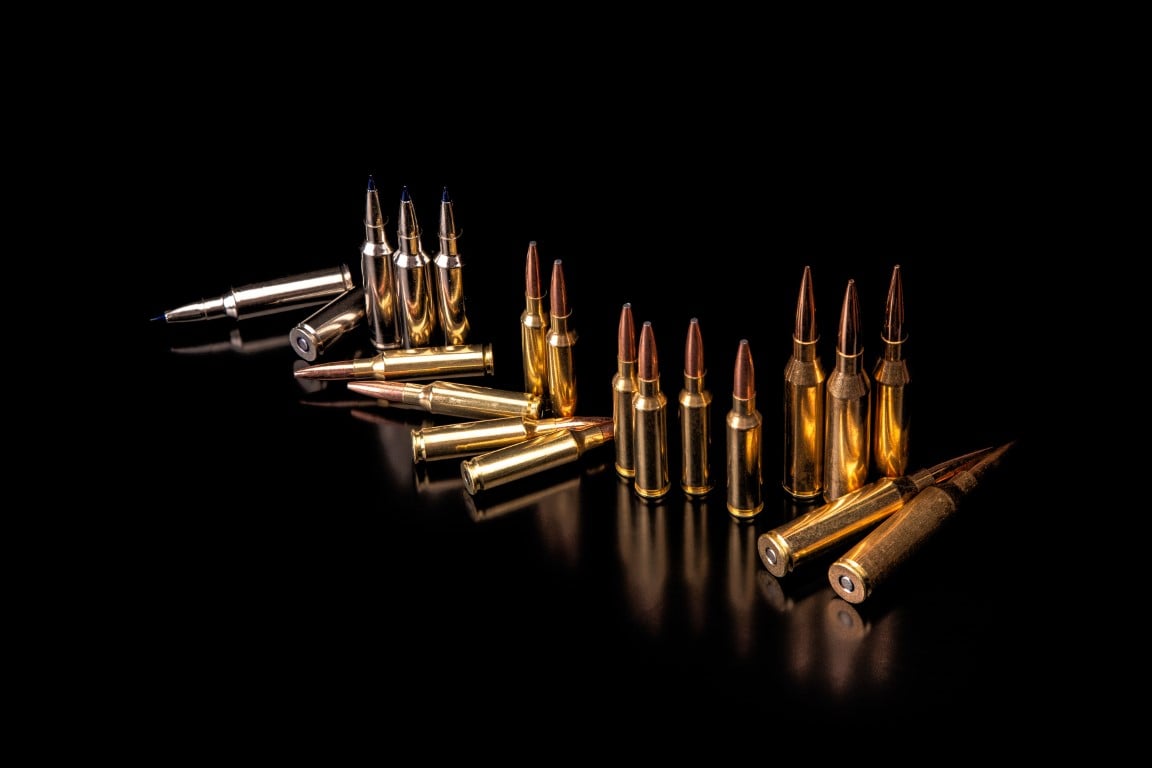
By the middle of the 19th century, however, cartridges very similar to what we use now had been developed. These contained a primer (which was much like the percussion cap), the propellant, the casing, and the bullet. Although the term “bullet” is often used informally today to refer to a complete cartridge, bullets technically refer only to the actual projectile. Most modern rifle and pistol casings today are often made of brass or steel, while shotgun cartridges utilize plastic casings.
The Mechanical and Chemical
Since the introduction of cartridge ammunition in the middle of the 19th century, there have been further developments. Within 50 years, standard gunpowder—known as black powder—was replaced by a “smokeless” powder based on nitrocellulose. The greater combustion energy this innovation provided spurred the development of the modern firearms we now take for granted, whether it’s a bolt-action rifle or a semi-automatic handgun or rifle.
The development of the bolt-action rifle in the late 19th century revolutionized both military and sporting arms, and the rifle’s reliable operating system essentially set the pattern for modern centerfire rifles. The early 20th century saw parallel development of the operating principles that allowed the development and refinement of semi-automatic rifles, both for sporting purposes and military use. With semi-automatic firearms—including handguns, shotguns, and rifles—some of the energy from the combustion created by ignition is used to move a bolt in the receiver (the area of a firearm that houses the internal operating components) to discharge a spent casing and to load a fresh cartridge. Modern AR platform rifles, though they look markedly different from other rifle designs, essentially use the same semi-auto operating principles to load, fire, and eject spent ammo.
Shotgun development followed the same trajectory, moving from muzzleloading systems to breech-loading systems. Semi-auto shotguns (also commonly called autoloaders), like semi-auto rifles, use the gas produced by ignition to cycle the gun.
Handgun design also evolved over the years. Modern revolvers look and function very much like their 19th century forebears, though they obviously use modern cartridges. Semi-auto handguns (commonly called pistols) are a very popular option these days. A modern development here is the striker-fired pistol, which does not have the traditional hammer. The result is a more streamlined profile, which makes such a gun easier to carry concealed.
Conclusion
The basic principles of firearms have existed for more than 1,000 years. Although the concept is simple, the operation involves a rather complex balance of raw materials and precision designs. All you really need to know is that when the gun is properly loaded, pulling the trigger activates a complex series of events that sends the bullet to the target.
FAQs
Q: What is the difference between a cartridge and a bullet?
A: A cartridge is all of the components that make up the ammunition that is loaded into a firearm. A bullet, also known as a round, is just the projectile. The rest of the cartridge will consist of the propellant, the primer, and the casing. The propellant is what is used to launch the projectile; the primer is what in essence ignites the propellant. The casing is what holds these components together. It is ejected automatically in most semi-automatic and fully automatic firearms. Bullets were originally called “rounds” because the earlier versions were round stones and later cast-metal balls–hence, they were round.
Q: What is the difference between semi-automatic and fully automatic firearms?
A: This is an area where there is a lot of confusion. Many early firearms required multiple steps, or “actions,” which included the cocking of the firearm by pulling back the hammer with the thumb. This often needed to be repeated with each shot, which manually loaded a new round into the chamber.
The development of “self-loading” or “automatic” firearms reduced the steps. A semi-automatic firearm only required that it was cocked, or “charged,” the first time. After each pull of the trigger, a new round was chambered by using some of the energy from the firing of the round, and the gun was ready for a subsequent shot. “Fully automatic” takes this a step further, where it loaded and continued to fire repeatedly. The action is the same, but the firearm keeps operating as long as the trigger is held, resulting in fully automatic operation.
Q: What is the difference between muzzle-loading and breech-loading?
A: Almost all of the earliest firearms in history were muzzle-loading, meaning that the powder and ball, or “round,” were literally dropped down the front (muzzle) of the weapon, and carefully pushed to the rear with a ramrod. This process was used in weapons from the massive cannons that were used against medieval walled cities to the smallest of handguns.
The earliest attempts at breech-loading began in the 14th century, but it took the tools and machining of the 19th century to perfect it. With the development of cartridges, firearms could more easily be loaded at the breech. A number of systems were devised that allowed the breech to be opened, a round loaded, and then the breech locked back in place.
Q: What is rifling, and how does it affect accuracy?
A: Early firearms were smoothbores (just like modern shotguns), and firing a projectile at a target meant the shooter had to stand within 100 yards or so to ensure an accurate shot placement. Rifling (essentially grooves in the barrel), along with modern cartridge design, imparted spin to the projectile, which allowed accurate shot placement out to several hundred yards.