How to Shoot a Pistol
Learning to shoot is like mastering any other physical skill-practice makes perfect
Michael Boyle
• 12 min read
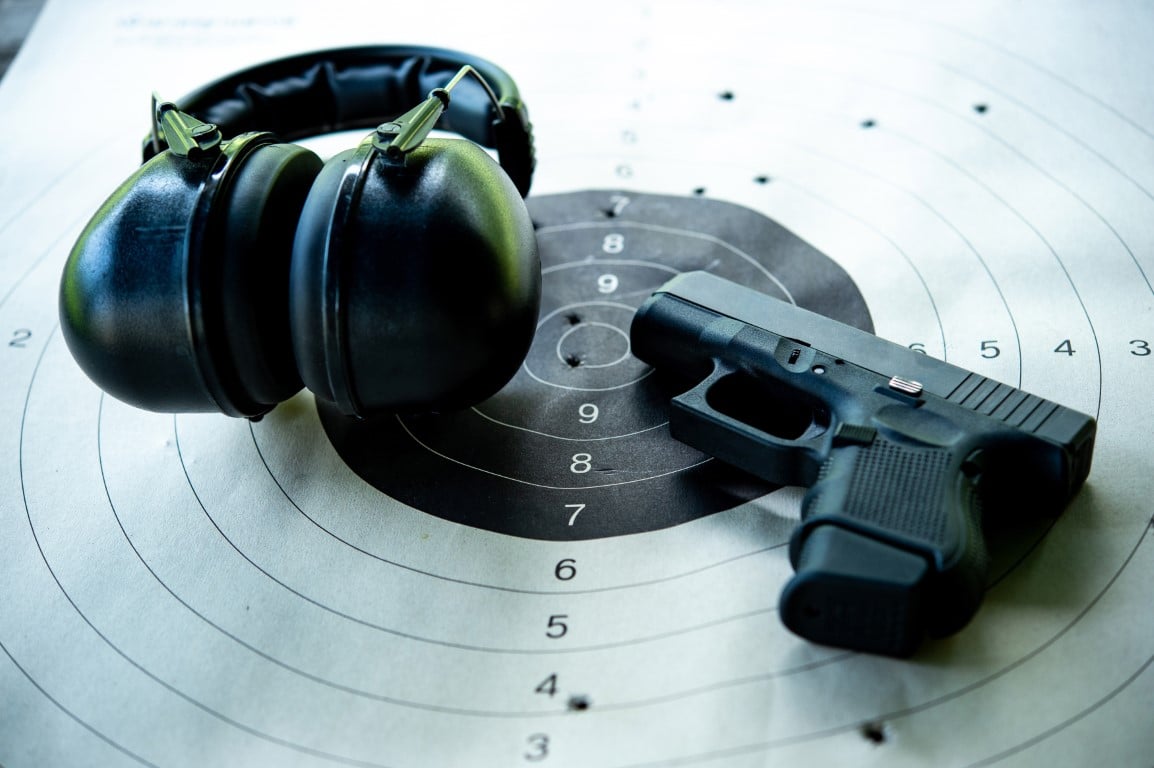
In recent years, the demand by consumers for pistols has been at an all-time high. Many of these handguns have gone to first-time gun owners who have no prior experience or have not taken any formal instruction, yet they have a desire to shoot well. Contrary to some widely held opinions, we are not born with a God-given gift to shoot with an acceptable degree of accuracy. Achieving that ability can be a little challenging, but with the right mental focus and a little practice, it can be done. I would offer that it’s a little more difficult than riding a bicycle, but far easier than mastering a musical instrument.
As with many other disciplines, success is found in the proper execution of some basic skills. These fundamentals are not rooted in mystery and have been widely known and taught for years. In fact, one could make an argument that these basic concepts are timeless and have not changed since the advent of the Colt Peacemaker a century and a half ago. If you adhere to these principles, you will no doubt meet with success.
Before we get into the nuts and bolts of how to shoot a pistol, however, a few words on safety are in order. Firearms are inherently dangerous instruments, and we do not have the luxury of learning by experience. Your first mistake may very well be your last. But if you make these rules part of your routine, you will never have a mishap with a gun.
Let’s Stay Safe
Without question, the best spin on firearms safety was developed many years ago by Colonel Jeff Cooper of the American Pistol Institute. These Four General Rules are very clear and will keep you and others safe on the range, your home, or out in the field. They are as follows:
- All guns are always loaded.
- Never let your muzzle cover anything you are not willing to destroy.
- Keep your finger off the trigger until your sights are on the target.
- Be sure of your target.
Using and carrying firearms requires a sharp mental focus. In reality, the use of firearms is no more dangerous than running power tools or driving an automobile, and one need not be intimidated. Regardless of their condition, all firearms should be handled with extreme care. The muzzle of your firearm should never cover your body parts or sweep in the direction of others. Mishaps occur when people disregard two or more of the rules, most often when the gun is pointed at someone or something it shouldn’t be and the finger comes in contact with the trigger. By paying attention to details, that situation can be avoided.
The Shooting Platform
A pistol may be fired with the body in any number of positions, including standing, kneeling, squatting, sitting, or prone. For most practical applications, the standing position is the most commonly utilized and remains a good place to start for the new shooter.
There are two popular methodologies relative to shooting stance, and over the years, the pendulum has swung back and forth. The first is an Isosceles Stance, where the body is pretty much square to the target and the arms are thrust straight out, forming a triangle. An alternative is the Weaver Stance, where the body is slightly bladed with the support-side foot slightly forward of the dominant-side foot. The shooter’s arms exert isometric tension, with the dominant-side arm pushing forward and the support-side arm pulling back.
Today, many experienced shooters utilize a stance that includes the best elements of both techniques. The legs are still slightly offset as in the Weaver Stance, but the upper body is just about square to the target. The nose is slightly forward of the shoulders, and the shoulders are forward of the hips. Be sure to keep the toes pointed toward the target for balance and mobility. Since we are all put together slightly differently, the bottom line is that you need to find a balanced stance that works for you. Of all the fundamentals, stance is the most negotiable.
Get a Grip
The grip is your connection to the gun and allows you control over the pistol. A good grip on the pistol also aligns the sights and will help you get on target quickly with a minimum of fine-tuning. Very often, a less-than-stellar performance with a pistol is caused by a poor grip.
To obtain a proper grip, the pistol must fit your hand. Right now, the hottest commodity in the market are high-capacity, striker-fired pistols with high-capacity magazines. While these pistols are perfect for the average-size male hand, the wider grip circumference sometimes makes them unsuitable for women. The good news is that several manufacturers now offer pistols with interchangeable backstraps and even side panels that fit a wide spectrum of hand sizes.
Understanding the proper grip on a pistol is best described from the rear to the front. The backstrap of the pistol should be centered in the thumb crotch, the V-shaped wedge of the hand between the thumb and index finger. With the pistol grasped in this manner, you can now place the distal pad of your index finger squarely on the trigger. Does it reach without shifting the hand? If you can only make contact with your finger tip, that’s a sure sign that the pistol’s grip circumference is too large for your hand.
Assuming we have proper fit, next wrap the middle, ring, and pinkie fingers around the grip frame and exert pressure. Tension should be similar to a firm handshake, with the middle finger hard up against the bottom of the trigger guard. The thumb of the dominant hand should be pointing forward, not out to the side in the hitchhiker position.
Although some target shooting and defensive disciplines involve shooting with one hand, most of the time we will be better served getting two hands on the pistol. Place the heel of your support hand on the support-side grip panel, with the support-hand thumb just under the dominant-hand thumb for maximum contact. Both thumbs should now be pointing forward. Make sure you exert just as much pressure with the support hand as you do with the dominant hand.
The Eyes Have It!
Sight alignment refers to the relationship between the front and rear sight; sight picture is when we add the eye and target to the mix. The sights are properly aligned when we have equal light and equal height of the front sight in the notch of the rear sight. Your primary focus should be on the front sight as you press the trigger. Since the eye can only focus on one plane at a time, both the rear sight and the target may appear slightly blurry.
Getting that sharp focus on the front sight can be a challenge for many shooters, as the eye changes from one focal plane to the next. In recent years, miniature red-dot sights (MRDS) have become very popular and may be worth exploring. With a red-dot sight, the shooter keeps both eyes open and merely places the red dot on what they want to shoot. Studies by a number of law enforcement agencies suggest that the use of red-dot sights enables shooters to reach a high degree of proficiency much sooner.
Trigger Management
The steepest hill to climb in learning to shoot a pistol is management of the trigger. The fundamentals previously outlined are static in nature, but working the trigger is a dynamic skill with things in motion. That said, learning trigger management need not be overwhelming.
Trigger management can be broken down into three phases—take up, the pressure wall, and reset. Let’s assume you are using one of the popular striker-fired pistols. When you initially apply rearward pressure, you will be taking the slack out of the trigger action and will eventually encounter a point of resistance—the pressure wall. Moving the trigger past that point will cause the gun to fire. As the muzzle of the gun rises in recoil, relax pressure on the trigger, allowing it to move forward and reset. On the striker-fired pistols, the trigger need not move to the full forward position before it is capable of being fired again. Even with striker-fired designs, there are some subtleties between the various brands, and the only way to get a handle on them is to run the gun and see for yourself. Start slow, and once you are comfortable, you will be able to fire multiple shot bursts with good effect.
There are, of course, different types of pistol trigger actions, including traditional double-action, double-action only, and single-action, each with their own quirks. No matter what type of pistol you choose, slow and deliberate practice at first will help your cause. In addition, dry-fire practice with an empty gun will help you get acquainted with your pistol’s trigger system.
Follow Though
Don’t be too quick to drop the muzzle of your pistol off-target after making that shot. There will be plenty of time to admire your handiwork later. In the way of a self-critique, I often find that if I’m dropping shots low on the target, the cause is taking my eye off the front sight the instant I press the trigger.
One trick I have found useful is to look for the smoke of the gun once you press the trigger. Will you see it? Probably not, but it does help you keep a front sight focus. As the pistol comes down in recoil, look for the front sight and be prepared to fire again. That first shot may not have had the desired effect, but a solid follow-up may put you in the winner’s circle.
Conclusion
As with many other disciplines, shooting pistol success is rooted in the proper execution of some basic skills. These are stance, sight picture, grip, trigger management, and follow-through after the shot. Each of these is not inherently hard to learn—the challenge is combining them properly to execute an accurate shot. But with practice, you will find that you can become an accurate and safe pistol shot.
FAQs
Q: No matter how hard I practice, I’m not hitting the target consistently. What am I doing wrong?
A: A great many shortcomings when shooting a pistol are caused by poor grip and trigger control. As indicated earlier, proper fit to the hand is critical to success. Should that grip circumference be too large, proper contact with the trigger is impossible. The end result is a discouraged shooter. Getting that perfect grip may seem difficult at first, but with just a little practice, it will come together very fast.
Q: Once I acquire the target, I shoot right away. But often I’m off-target. Why is that?
A: A common flaw in both new and experienced shooters is that they get that perfect sight picture and press that trigger now, before it moves off-target. The end result is a terrible press, with the muzzle dipping off the target and a miss. Be sure to maintain a hard focus on the sights and a controlled press. Do this and you will be assured of a hit.
Q: My pistol range has targets set at 25 and 50 yards. At which distance should I practice?
A: Your initial practice should be done at relatively close range, with the target only 10 feet or so distant. At this point, speed is not an issue, and an open-end time frame will allow you to mentally critique each shot. Am I doing everything right and hitting? Once you meet with a fair degree of success, you can take a few steps back and repeat the process.
Q: Is it possible to learn how to shoot correctly from watching YouTube videos?
A: Videos and books are great, but there is simply no substitute for competent instruction from a qualified individual. That may not be a spouse, fishing buddy, retired policeman, or military veteran. A squared-away instructor can help get you on the right path. And with a little regular practice, you can soon be at the top of your game.