How to Choose a Quick-Access Gun Safe
With so many options, the choice can get confusing. Here's how to figure out what works for you
Christopher Cogley
• 9 min read
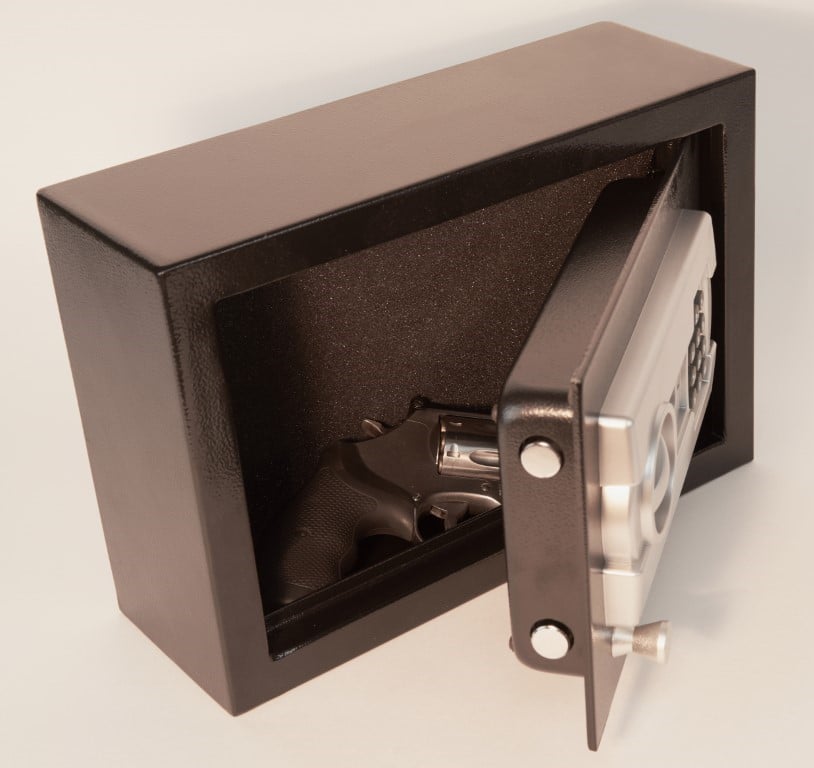
A large percentage of firearms are purchased for the express purpose of home defense. Regardless of the type of firearm you choose to protect your home and family, the only way it can truly be effective is if you can access your gun when you need it. However, the ability to get to your firearm quickly in an emergency doesn’t override the responsibility of every gun owner to keep your firearm safely secured to prevent unwanted access or theft. Fortunately, there are an abundance of options for responsible gun owners that allow you to not only safely store your home-defense firearms, but also access them at a moment’s notice. Before you jump in to purchase one of these quick-access gun safes, though, take some time to carefully consider a few options so you can make sure you choose the safe that best fits your individual needs.
Type of Firearms
The first thing you should consider when choosing a quick-access gun safe is the type, and number, of firearm(s) you want for home defense. The vast majority of quick-access safes are designed for handguns, so you will have more options if that’s your firearm of choice. It’s still important, however, to consider if you want a single-handgun safe or multiple options. While many safes are extremely versatile, keep in mind that the type of handgun can also make a difference in the type of safe you get. Not all safes work with top-mounted sights, tactical lights, or other accessories you might have mounted on your gun. Depending on the size of the safe, it also might not accommodate larger-barreled handguns or even some revolvers.
If your preference for home defense is a tactical shotgun, an AR platform, or anything else larger than a handgun, you still have plenty of options for effective quick-access safes. Many of these can be discreetly mounted under your bed or other furniture, or even behind paintings and other wall art. Some furniture—such as chairs, nightstands, and coffee tables—have quick-access safes built into them. These options can be extremely effective, but they often carry a pretty hefty price tag.
Locking Mechanism
Once you decide the type and number of firearms you’ll be storing, the next consideration is the one that is arguably the biggest distinction between types of quick-access gun safes. There are four main categories of locking mechanisms for these types of safes—biometric, keypad, radio frequency identification (RFID), and mechanical.
Biometric locks are programmed to read the fingerprints of people who are authorized to access the safe. The technology is very similar to the technology used in phones with fingerprint-recognition access. Without a doubt, biometric locking mechanisms offer the quickest and easiest access to your firearm, but, just as with phones, the technology isn’t always as reliable as we’d like it to be. These are typically the most expensive safes, and as with any other electronic safe, they require a power source to access. Many of them come equipped with rechargeable lithium batteries, which have a longer life and are more reliable, but you have to remember to charge them or they may not be operational when you need them most.
RIFD locking mechanisms use a signal from a key fob, or some other device with a dedicated chip, to open the safe with a simple swipe. These safes open nearly as quickly as those with biometric locks as long as the key fob is easily accessible. That caveat is the biggest downside to the RIFD locking mechanism, as well as the fact that, like the other electronic locking mechanism, if there isn’t power to the safe, it doesn’t work as it’s intended.
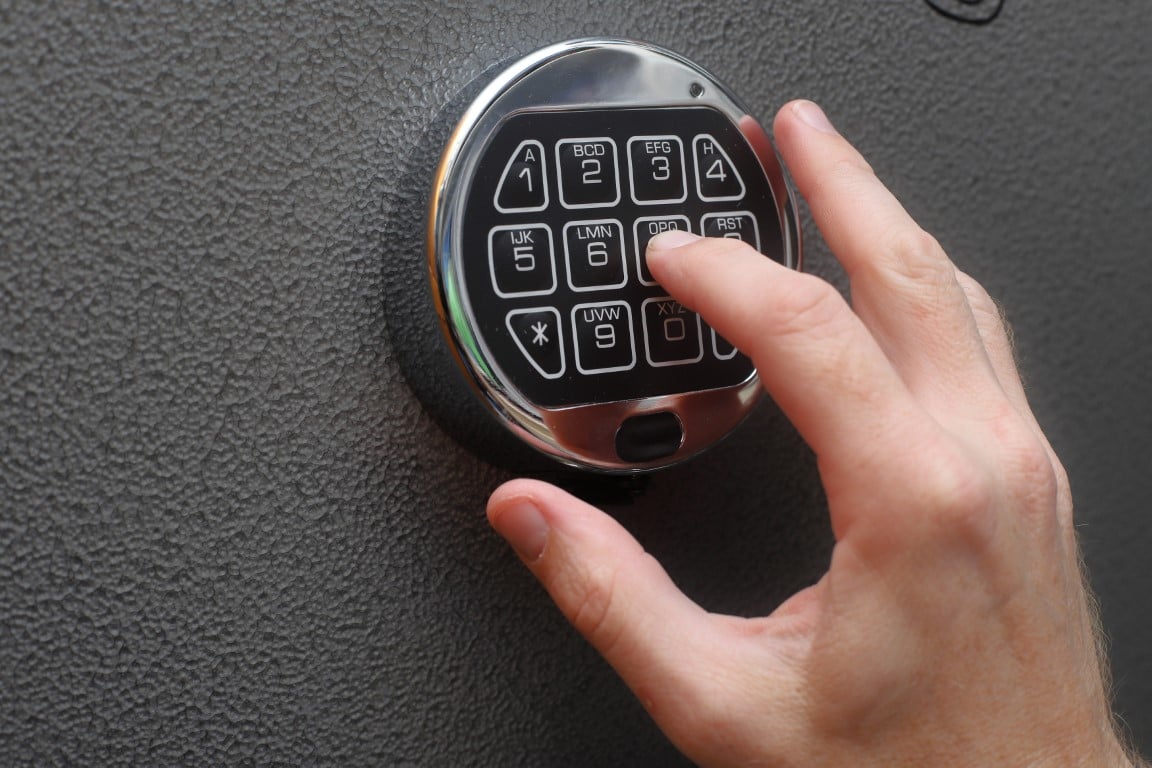
Keypad locking mechanisms are available in electronic and manual operation. Both provide relatively quick-and-easy access to your firearm, though not at the same level as biometric or RIFD safes. And while there’s not a concern about having a key or fob, these safes do require you to have a code memorized well enough so you won’t forget it in an emergency when the adrenaline hits your brain.
Although a safe with a key lock is certainly the slowest way to get to your firearm, it’s also the most reliable and affordable. You don’t have to worry about loss of power or forgetting a code, but you do have to take the extra step of retrieving the key from its well-disguised hiding spot. The other downside to this safe is the very real possibility of fumbling around in the dark as you try to get the key into the lock while your heart is racing. (Picture that person trying to open the door or start the car in every horror movie ever made.)
Access to Your Firearm
The locking mechanism that opens the safe is the first step, but after that you’ll still need access to the firearm inside. That brings us to the next consideration in choosing the best safe for you.
Accessing the firearm is typically the primary consideration for the design of the safe. Some are created with a door that drops down so the grip of the gun is facing you, which makes it easy and intuitive to grab and draw out. Others have horizontal shelves for multiple guns or a top that pops up so you can reach down into the safe. The options are many, and much of the choice comes down to personal preference. The size of your hand is also a big consideration, one that often goes overlooked. Some safes, especially those that are designed with better concealment in mind, have small openings that might not work for people with larger hands. Before deciding which is best for you, try some options out in the store and see which one is the best fit for you.
There are also different options for how the door to the safe opens. Some safes have a hydraulic door opening similar to what is on the hoods or rear hatches of many cars. This is bit slower, but also quieter. There are also spring-loaded door opening mechanisms that are faster, but have the disadvantage of causing an audible slap when they open. And there’s also a manual option that is even slower than the hydraulic mechanism, but it is reliable, effective, and typically more affordable.
Conclusion
Regardless of which safe ends up being the best choice for you, it’s important to understand that your home defense doesn’t end with purchasing and mounting the safe. The purpose of a quick-access gun safe is to ensure you can get to your firearm quickly in an emergency. As with anything else, to be efficient at this, it’s important to practice opening your safe. In an emergency, adrenaline will be flowing and thinking will be difficult. This is when muscle memory takes over. The only way that muscle memory will be effective when it comes to opening your safe, though, is if you have practiced accessing it dozens—if not hundreds—of times. It might seem tedious, but if that emergency comes, you’ll be grateful for the extra effort.
FAQs
Q: Where’s the best place to put my safe?
A: Much of this comes down to personal preference and where you think will be the easiest place to access it in an emergency. If you have an electronic safe, be sure it’s within a reasonable distance of an outlet, even if it’s just to recharge the batteries. Also make sure that wherever you mount your safe is a place that tends to be free of clutter. You don’t want to be tripping over shoes or dirty clothes in the dark when you’re trying to get to your gun in a hurry.
Q: What type of accessories should I purchase?
A: When it comes to quick-access safes, less is usually more. A safe with a lit keypad and interior is always a good idea, and a soft lining isn’t a bad way to go. Other than that, the minimalist approach is probably best. Anything that detracts from the simplicity tends to be counterproductive to a quick-access safe.
Q: Should I mount my safe or have it freestanding?
A: Mounting your safe is the safer option and makes it much more difficult for thieves to walk away with it. It also makes it easier to access in an emergency since it will always be in the same place, facing the same direction. If you live in an apartment, or tend to move around a lot, this might not be an option unless you can mount the safe to a nightstand, bed frame, or some other furniture.